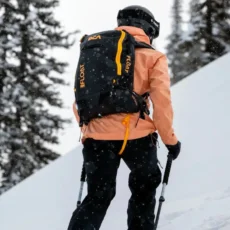
Avalanche Airbags have become one of the most popular rescue tools in recent years for snowy routes and ski touring. However, the question remains: can these airbags truly save climbers’ lives, and how reliable are they? This article explores their performance, limitations, types, maintenance, and buying tips to provide a clearer understanding of their effectiveness.
Table of Contents
When Is an Airbag Effective and When Is It Not?
Importance of Route and Terrain Type
The choice of route and terrain conditions plays a far more critical role than the airbag itself. If the avalanche path is filled with dangerous obstacles such as trees, large rocks, or terrain traps, even the best airbag cannot guarantee survival. In such cases, a person may still be buried in snow despite having an airbag. In other words, an airbag is an auxiliary tool and cannot replace smart decision-making in route selection.
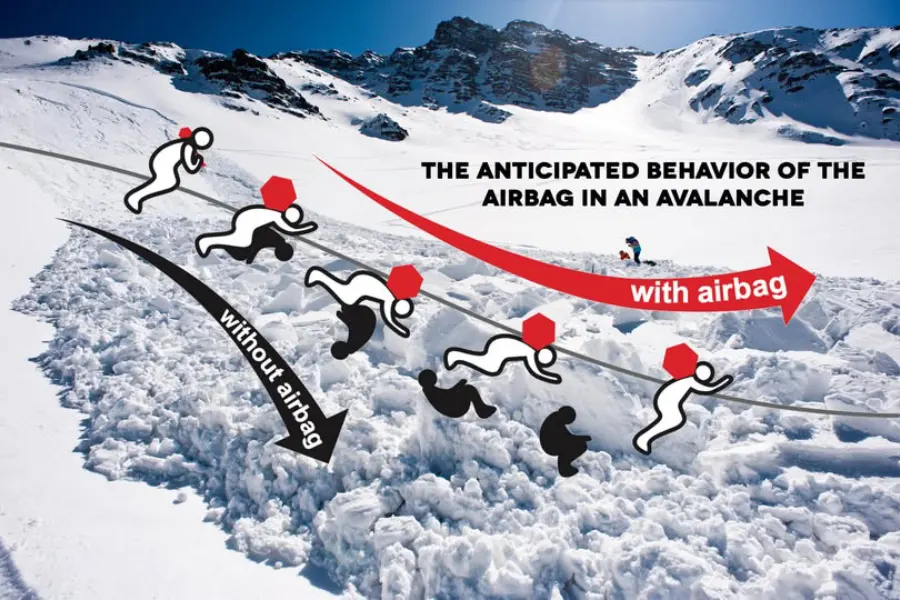
Primary Goal of the Airbag: Reducing Burial Depth
The main function of airbags is to reduce the depth at which a person is buried in an avalanche, not to guarantee absolute survival. Reducing deep burial helps keep parts of the body, especially the head, near the surface, increasing the chances of being located quickly and improving the likelihood of survival.
Limitations Related to Avalanche Speed and Path
If the avalanche speed is low or the fall path is short, the force generated may not be sufficient for the airbag to lift the person. Therefore, airbag effectiveness depends on avalanche dynamics, snow volume, slope steepness, path length, and presence of obstacles.
How Airbags Work
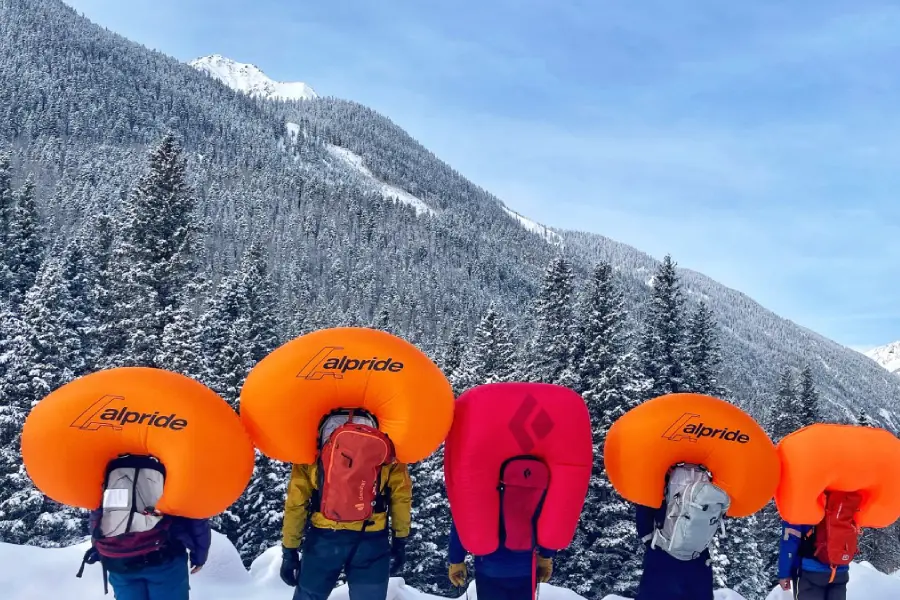
Avalanche airbags resemble large air-filled bags that rapidly inflate during an avalanche to keep the user near the surface of the snow.
Working Principle
When activated, the airbag inflates quickly, increasing the person’s geometric volume. This volume change enhances the likelihood of remaining near the surface and reduces deep burial. This mechanism is similar to the principle of displacement in physics.
For up-to-date and reliable information on the effectiveness of avalanche airbags and overall avalanche safety, visit Avalanche.org.
Creating an Air Pocket
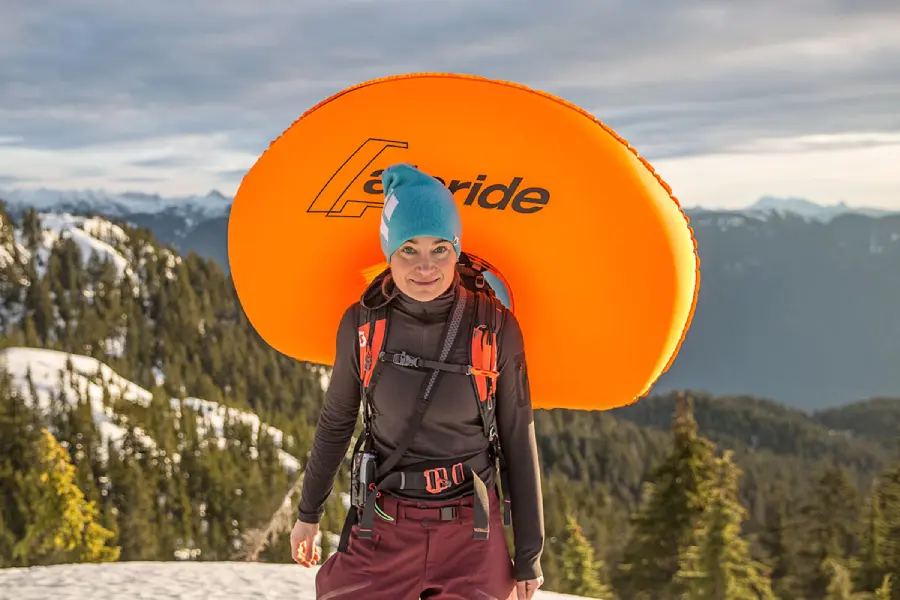
Many airbags gradually release air after inflation to create an air pocket around the head and face. This pocket allows gas exchange and provides more time for rescuers to locate the person. However, there are limitations, such as the accumulation of exhaled CO₂ or phenomena like “displacement asphyxia,” which may reduce oxygen levels.
Factors Affecting Performance
Airbag performance is influenced by several factors, including:
- Design and Build Quality: Inflation volume, air distribution, and post-activation release system.
- User Training: Incorrect or delayed activation can prevent the airbag from functioning properly. Around 20% of airbags fail to deploy correctly during an avalanche.
- Risk Compensation Effect: The presence of an airbag may create a false sense of security, leading individuals to take riskier routes. Therefore, airbags do not replace proper training and rescue equipment.
For a deeper look at Avalanche Risks in Ski Touring, check out this detailed analysis on Whiteout Zone!
Key Facts About Avalanche Airbag Effectiveness
Avalanche airbags are designed to improve survival chances in avalanches, but their effectiveness depends on multiple factors
- Primary Function: They mainly reduce burial depth, keeping the head and upper body near the surface.
- Terrain Matters: Effectiveness decreases in avalanche paths with trees, rocks, or traps.
- Deployment Reliability: About 20% of airbags may fail to deploy properly.
- User Training: Correct and timely activation is crucial for performance.
- Survival Statistics: Studies show that activated airbags reduce the risk of critical burial from 47% to around 20%. Overall, airbags are a vital safety tool, but they complement—rather than replace—good decision-making and proper avalanche training.
Activation and Maintenance Tips
Activation: Regular practice of pulling the trigger is essential, as mistakes or delays are likely during a real avalanche. Some models recommend minor body movements after pulling the trigger to ensure full inflation.
Maintenance: After each use or periodically, inspect the gas cartridge (for cartridge systems) or battery and wiring (for electronic systems).
Check the bag for tears, holes, or mechanical damage.
Before the season, activate the airbag in a safe environment once to ensure all components function correctly.
Storage Conditions: Store the airbag in a cool, dry place and avoid excessive mechanical pressure.
Buying Guide for Avalanche Airbag
- Activation Capability: Check if the model is single-use or reusable, ensure adequate inflation speed and volume, and that the trigger is easily accessible.
- Weight and Volume: Consider the bag weight with cartridge or battery and the ease of carrying the backpack.
- Gas Source or Charge: Ensure cartridge or battery replacement is accessible.
- Additional Safety: Prefer models with controlled release systems and designs that prevent pressure on the neck and head.
- Training and Support: The manufacturer should provide training, videos, full manuals, and service support.
Survival Probability with Avalanche Airbags
Studies have shown that individuals with activated airbags have a lower risk of critical burial and a higher chance of survival compared to those without airbags. For instance, the risk of critical burial for activated airbag users is around 20%, while for people without an airbag or with a non-deployed airbag, it is approximately 47%. However, not all airbags deploy correctly, and avalanche conditions do not always favor airbag effectiveness. Therefore, airbags are an effective tool but should be used in conjunction with training and other safety equipment.